

Table of Contents
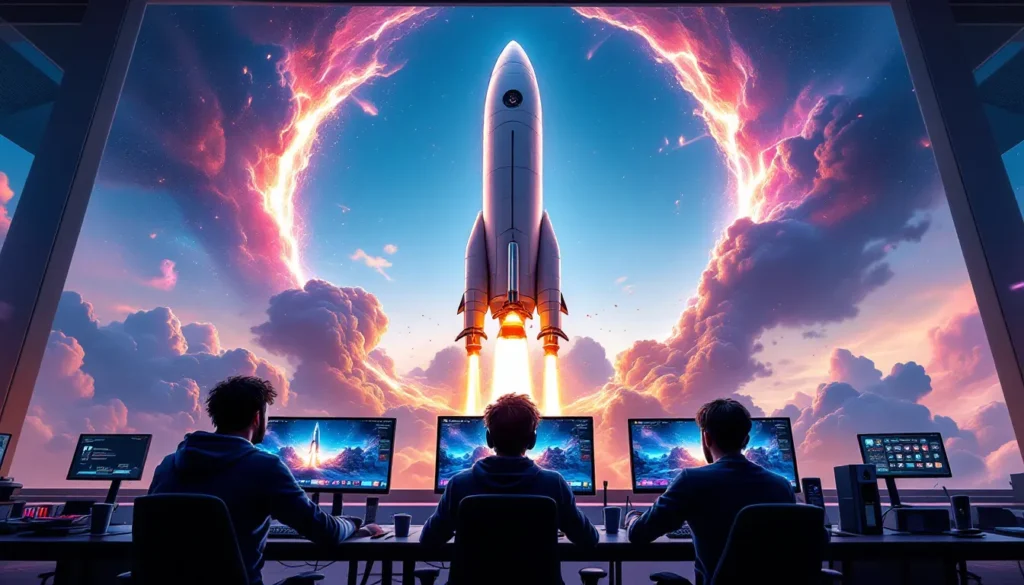
ToggleOn June 30, 2018, over a million Fortnite players stopped shooting each other and stared at the sky. What they witnessed, a massive rocket tearing through reality itself, changed how the gaming industry thought about live events forever. No cutscene, no trailer, no pre-recorded video. Just a one-time, in-game spectacle that you either saw or missed.
Since that groundbreaking moment, Epic Games has turned rocket launches and sky-shattering events into narrative cornerstones of Fortnite’s evolving story. These aren’t just marketing gimmicks: they’re meticulously engineered spectacles that draw millions of concurrent viewers, break streaming records, and leave players dissecting every detail for weeks. Whether you’re a veteran who watched The Visitor’s rocket crack open the sky or a newer player curious about what all the hype is about, understanding Fortnite’s rocket launch events is key to grasping why this game remains a cultural phenomenon.
This guide covers everything: the technical wizardry that makes these events possible, how to prep for upcoming launches, the lore connections that tie them together, and what Epic might have planned next. Let’s break down the moments that made Fortnite more than just a battle royale.
Key Takeaways
- The June 2018 Fortnite rocket launch live event revolutionized gaming by delivering a synchronized, unrepeatable spectacle to over a million players simultaneously without instancing or cutscenes.
- Fortnite rocket launch events serve as narrative cornerstones that connect seasons and chapters through an interconnected lore centered on The Loop, The Visitor, and The Seven’s rebellion.
- Epic Games developed innovative server architecture including global synchronization protocols and dedicated event servers to handle 6+ million concurrent players while maintaining stable gameplay.
- Live events require strategic preparation: log in 45+ minutes early, build viewing platforms on high ground, close background apps, and use a wired connection to avoid missing unrepeatable moments.
- Fortnite’s rocket launch formula has become an industry standard, inspiring competitors like Apex Legends and Call of Duty to create their own map-changing live events with narrative significance.
- Future rocket launches are expected to feature increased player interactivity, cross-platform integration, persistent map consequences, and deeper narrative escalation tied to metaverse ambitions.
What Made the Original Fortnite Rocket Launch So Groundbreaking?
How the June 2018 Event Changed Gaming Forever
The Blast Off event on June 30, 2018, wasn’t the first in-game event in gaming history, but it was the first to execute at this scale with zero instancing and full player agency. Unlike MMOs that phase players into separate instances or games that force everyone into a cutscene, Epic kept every player in the same match, guns loaded, while a massive rocket launched from the villain lair at Snobby Shores.
What made it revolutionary wasn’t just the spectacle, it was the risk. Epic trusted over a million players not to ruin the moment by cranking 90s or thirsting kills. And for the most part, it worked. An informal ceasefire broke out across servers as players built viewing platforms and watched The Visitor’s rocket punch a rift into the sky above Tilted Towers, teleport across the map multiple times, and crack reality itself.
The event lasted roughly two minutes, but its impact stretched far beyond. It proved that a live, unrepeatable moment could generate more engagement than any cinematic trailer. Streamers like Ninja and DrLupo pulled record viewership. Social media exploded with clips and theories. And most importantly, it established Fortnite as a live service narrative experience, not just a shooter with seasonal skins.
Technical Innovation Behind the Live Event System
Pulling off a synchronized event for millions of players across thousands of servers required Epic to invent new tech on the fly. Traditional multiplayer architecture wasn’t built for this. Each match instance needed to trigger the rocket sequence at the exact same moment, down to the millisecond, while maintaining stable gameplay and minimal lag.
Epic’s solution involved a global event coordination system that sent signals to all active servers simultaneously. The rocket’s flight path was pre-baked but rendered server-side, meaning every player saw it from their unique perspective without desync issues. The entire sequence was hidden in encrypted files within the game client, preventing leaks while minimizing the download size for what was essentially a one-time asset.
They also implemented temporary PvP restrictions in later events, disabling weapons during the event window to prevent griefing. For Blast Off, this wasn’t in place yet, Epic relied on player goodwill and the shared excitement of witnessing something unprecedented. The gamble paid off, but it taught them valuable lessons about managing player behavior during vulnerable moments.
The server load was staggering. Epic had to spin up extra capacity, optimize netcode to handle stationary players (ironically harder than tracking fast movement), and prepare for worst-case scenarios like DDOS attempts. The fact that the event went off with relatively few hitches is a testament to their backend engineering. Later events would refine this system, but the foundation was built in those frantic weeks before June 30.
Every Major Fortnite Rocket and Sky Event Since 2018
Season 4: The Visitor’s Rocket Launch
The original Blast Off event concluded Season 4’s meteor-and-superhero storyline. The Visitor, a mysterious figure who emerged from a meteor that crashed in Season 3, built a rocket inside the villain lair. When it launched, it didn’t just fly up, it created a network of rifts across the map, setting up the dimensional instability that would define future seasons.
Key details: The rocket launched at 1:30 PM ET on June 30, 2018. The flight path took it over Tilted Towers, Loot Lake, and Lonely Lodge before creating a massive rift in the sky. This rift remained visible for weeks, slowly expanding and eventually pulling objects from our world (like the Durr Burger head that appeared in a California desert as a real-world ARG stunt).
Season X: The Meteor and Rift Events
Season X (Season 10) brought time travel and paradoxes to the forefront. The Meteor and Rift Beacon events weren’t singular rocket launches but a series of smaller, interconnected events. Rift Beacons appeared at various POIs, and when activated, they would pull alternate-timeline versions of locations back onto the map.
The climax came with The End event on October 13, 2019. The meteor, frozen in time above the map since Season 4, finally struck. But instead of just impact, it triggered a chain reaction involving the Zero Point at Loot Lake. The entire map was consumed by a black hole, and for two days, Fortnite was unplayable, just a black hole on screen. Players worldwide watched streams of literally nothing, speculating what would come next.
This wasn’t technically a “rocket” event, but it borrowed the same live-event DNA: unrepeatable, high-stakes, and narratively pivotal. Over 4 million concurrent viewers watched the black hole on Twitch alone, setting records.
Chapter 2 and Beyond: Evolution of Launch Events
Chapter 2 launched with a clean slate but eventually brought back the rocket motif in more sophisticated ways. The Device event (Season 2, Chapter 2) featured multiple rockets launching from The Agency, creating a storm-pushing mechanism that revealed the island was inside a simulated loop. Players watched as the storm wall became transparent, showing an endless ocean beyond, a mind-bending reveal.
Chapter 3 introduced The Collision event, which saw the IO’s battle stations and massive war machines clashing with The Seven’s forces. Rockets and missiles were everywhere, but the scale had evolved from a single launch to full-on mechanized warfare across the map. Players could pilot mechs, destroy drill sites, and witness the Mech vs. Monster-style showdown between the Collider and the Doomsday Device.
By Chapter 4, Epic had perfected the formula: combining cinematics with gameplay, allowing players to interact with events rather than just observe. The Fracture event (ending Chapter 3) had players racing across a crumbling island, which competitors and gaming news outlets like Dexerto covered extensively due to its high production value and narrative stakes.
How to Experience and Prepare for Fortnite Live Events
Finding Event Times and Getting Early Access
Epic typically announces live events 1-2 weeks in advance through in-game messages, official social media, and the Fortnite blog. Event times are always displayed in your local timezone within the game client. But, logging in early is crucial, Epic often opens a special playlist 30-60 minutes before the event begins.
These pre-event playlists usually disable combat entirely and spawn everyone on the map with unlimited mats. This lets players build viewing platforms or explore before the chaos starts. If you try logging in at the exact event time, you risk server congestion or being stuck in a loading screen. Aim to be in-game at least 45 minutes early.
Set calendar reminders and check Fortnite’s official channels the day before. Epic occasionally adjusts times due to technical issues or timezone confusion. Missing a live event means missing it forever, there are no replays (though Epic posts cinematic recaps afterward, which gaming outlets like GameSpot typically break down within hours).
Best Landing Spots and Viewing Locations
For most rocket and sky events, high ground and central locations offer the best views. Here’s what to prioritize:
- Build a platform at max build height near the center of the map. Bring extra mats if the event playlist allows harvesting.
- Avoid named POIs where clutter or buildings might block sightlines. Open areas like fields or hilltops work best.
- Watch for in-game markers. Epic often places glowing indicators or camera angles suggesting where to look. Follow those cues.
- Stay mobile. Some events (like The Convergence) require you to move as the map changes in real time. Don’t get comfortable.
If combat is still enabled (rare now, but it happened in early events), land at the edges of the action and play defensively. You don’t want to spend the event in spectator mode because someone sniped you.
Technical Setup: Avoiding Lag and Server Issues
Nothing’s worse than stuttering through a once-in-a-lifetime event. Here’s how to optimize:
- Close background apps that hog bandwidth: Discord streams, Chrome tabs, downloads.
- Use a wired connection if possible. Wi-Fi can introduce packet loss during high-traffic moments.
- Lower graphics settings temporarily. Even if you usually run Epic settings, drop to High or Medium for events to stabilize FPS.
- Restart your game client an hour before the event to clear memory leaks.
- Check server status on Epic’s status page. If your region is showing issues, you might have time to switch regions (at the cost of higher ping).
Epic’s servers are battle-tested now, but unprecedented player counts still cause occasional hiccups. Having a backup plan, like watching a reliable streamer if your client crashes, isn’t a bad idea. The competitive esports community, often featured in events like the Global Championship, faces similar server stability concerns during high-stakes matches, so Epic has invested heavily in infrastructure improvements.
The Impact of Rocket Launch Events on Fortnite’s Storyline
How Launch Events Connect Seasons and Chapters
Rocket launches aren’t just spectacle, they’re the narrative glue holding Fortnite’s increasingly complex lore together. The Visitor’s rocket in Season 4 introduced rifts, which brought Kevin the Cube in Season 5. Kevin’s journey led to the Loot Lake corruption and the Butterfly event. That event hinted at The Zero Point, which became central to Season 9 and Season X.
Each rocket or major launch serves as a fulcrum moment, where cause and effect across seasons become clear. The Device event revealed the island was looped in time by the IO organization. The Zero Crisis Finale showed Agent Jones recruiting The Foundation to seal the Zero Point. Collision depicted The Seven’s final assault on IO’s forces. It’s a serialized narrative told through gameplay, not cutscenes.
Epic uses these events to reset or evolve the map, justifying massive POI changes that would otherwise feel random. Why did Tilted Towers get destroyed and rebuilt multiple times? Because rockets, meteors, and mechs keep obliterating it. Why did the map flip upside down in Chapter 2? The Zero Point destabilized during The End. The in-universe logic might be wild, but it gives changes weight and continuity.
The Loop, The Seven, and Rocket Significance
The rocket motif is deeply tied to Fortnite’s central mystery: The Loop. The island exists in a time loop controlled by the IO (Imagined Order), where combatants are trapped in an endless cycle of battle. The Visitor’s rocket was his attempt to escape, hence why it punched rifts through reality.
The Visitor later founded The Seven, a resistance group dedicated to freeing the island from IO control. Multiple events feature The Seven using rockets and advanced tech to sabotage IO’s infrastructure. The rockets symbolize freedom and rebellion against the loop’s enforcers.
Why rockets specifically? They’re inherently dramatic and visible. A rocket launch is a universally understood “big deal”, expensive, dangerous, and hard to stop. In Fortnite’s lore, they also represent dimensional travel, which ties into the rift mechanics that let alternate realities collide. The rockets aren’t just weapons: they’re keys to unlocking doors between worlds, which is why so many pivotal story beats involve them.
For lore enthusiasts, dissecting rocket trajectories and rift placements has become a metagame. Community sleuths on Reddit and YouTube analyze every frame, trying to predict next season’s story beats. Epic occasionally plants easter eggs in these events, like hidden symbols or audio cues, that won’t pay off until chapters later.
Behind the Scenes: How Epic Games Creates Rocket Launch Events
Development Process and Secrecy Measures
Epic treats live events like black-ops missions. Development happens in isolated teams with need-to-know access only. Event assets are encrypted in game files and labeled with misleading names. For example, The Device’s storm-manipulation sequence was reportedly hidden under placeholder titles referencing mundane cosmetics.
Production timelines are brutal. Teams start planning events 4-6 months in advance, coordinating with narrative designers, audio engineers, netcode specialists, and QA. They build the event in a separate sandbox environment, testing it hundreds of times to account for edge cases: What if someone’s on a hoverboard? What if they’re emoting? What if they’re mid-reboot at a van?
Leaks are Epic’s biggest nightmare. Data miners scour every patch for hints, and Epic has learned to plant red herrings, fake files that suggest events that never happen. Some leaks are even intentional, used to gauge community reaction or build hype without official commitment.
Once the event is ready, it’s deployed in an encrypted patch days before, activated server-side at the scheduled moment. This prevents premature access while ensuring all clients have the necessary assets loaded. It’s a tightrope walk between secrecy and functionality.
Server Architecture for Millions of Simultaneous Viewers
At its peak, The End event had over 6 million concurrent players in-game, not counting millions more watching streams. Handling that load without melting the infrastructure required Epic to rethink their server architecture.
Key innovations include:
- Dedicated event servers: Separate from normal matchmaking, optimized for high player counts with reduced tickrate (since combat is disabled).
- Global synchronization protocols: Ensures the event triggers simultaneously across all regions, preventing spoilers from early timezones.
- Failover systems: Backup servers that spin up automatically if primary servers buckle under load.
- CDN integration: Event assets are pre-cached on content delivery networks worldwide, reducing latency when the event begins.
Epic also coordinates with AWS and other cloud providers to temporarily scale capacity. They’ve shared some of these techniques at GDC talks, and other developers have borrowed the playbook for their own live events. Gaming analysis sites like Game Rant have covered how Epic’s event infrastructure has influenced industry standards for live-service games.
Community Reactions and Cultural Impact
Streaming Records and Social Media Explosion
Fortnite’s rocket launch events consistently break streaming records. The original Blast Off event had over 1.1 million concurrent viewers on Twitch alone, not counting YouTube, Mixer (RIP), and other platforms. The End’s black hole peaked at 4.2 million on Twitch, and that doesn’t include the millions watching in-game.
Streamers like Ninja, Tfue, Courage, and SypherPK have made event watch parties a tradition. Their reactions, genuine surprise, hype, and lore speculation, amplify the experience for viewers who couldn’t log in. Clips from these streams go viral instantly, trending on Twitter and Reddit within minutes.
Social media becomes a live, global chat room during events. Hashtags like #FortniteEvent and #FortniteLive trend worldwide. Players share screenshots, theories, and memes in real time. Epic has leaned into this, sometimes incorporating community feedback or inside jokes into the events themselves (like the Peely smoothie meme being referenced in later seasons).
The cultural impact extends beyond gaming. Mainstream media outlets cover major Fortnite events. Parents who don’t game recognize the rocket launch as “that thing my kid was yelling about.” It’s become a generational touchstone, similar to how older gamers remember the first time they saw a game like Halo or World of Warcraft.
How Other Games Have Copied the Live Event Formula
After Fortnite proved the model, competitors rushed to replicate it. Apex Legends launched its own map-changing events, though with less narrative fanfare. Call of Duty: Warzone had nuke events that destroyed Verdansk and introduced Caldera. PUBG experimented with comeback events. Roblox hosted concerts and crossover events with similar real-time spectacle.
Even non-battle-royale games took notes. Destiny 2 ramped up its seasonal events with live story beats. Genshin Impact incorporates limited-time story quests that feel like events. The live-service model has evolved from “here’s a new patch” to “here’s an experience you can’t miss.”
Not all attempts succeeded. Some games treated events as glorified cutscenes with no interactivity, missing the point. Others suffered from technical disasters, servers crashing, events not triggering, or poor communication leaving players confused. Fortnite’s success isn’t just about doing events: it’s about doing them reliably and memorably. Epic’s years of iteration and investment in infrastructure set a bar that’s expensive and difficult to match.
The ripple effect has reshaped player expectations. Gamers now anticipate live events as part of the seasonal cadence, and missing one feels like missing out on a shared cultural moment. Epic didn’t invent the live event, but they perfected the formula and turned it into an industry standard.
What to Expect from Future Fortnite Rocket Launch Events
Epic has spent years refining live events, and future rocket launches will likely push boundaries even further. Based on recent patents, job postings, and community speculation, here’s what’s plausible:
More interactivity: Expect events where player actions influence outcomes, even if on a small scale. Imagine voting mid-event on where a rocket should target, or using buildable objects to protect an area.
Cross-platform integration: Epic has experimented with second-screen experiences (like the Fortnite app showing map changes in real time). Future events might incorporate mobile companion apps, augmented reality, or even real-world tie-ins like the Durr Burger ARG.
Persistent consequences: Recent events have left permanent scars on the map. Expect future launches to create lasting changes, not just new POIs, but evolving structures that grow or decay over weeks.
Metaverse ambitions: Epic has made no secret of its metaverse vision. Rocket launch events could become portals to entirely different game modes, crossover universes, or collaborative experiences with other IPs (we’ve already seen Marvel, Star Wars, and DC).
Narrative escalation: The lore is getting denser. Future events will likely require players to have followed previous chapters to fully appreciate the stakes. Epic might even introduce multiple event variations based on choices made in prior seasons, though that’s technically complex.
Epic has also hinted at seasonal rotations, where past events could return in modified forms for players who missed them. This is tricky, part of the appeal is exclusivity, but it could serve as a “greatest hits” for newer players.
One thing’s certain: Epic won’t stop innovating. The rocket launch formula works because it evolves. What wowed players in 2018 wouldn’t cut it now. Epic knows this, and they’re already building whatever comes next. If you’re keeping track of season launches and timing, you’ll know when to expect the next big thing.
Conclusion
Fortnite’s rocket launch events aren’t just marketing stunts, they’re the heartbeat of a live, evolving game that refuses to stand still. From the original Blast Off in 2018 to the multiverse-shattering spectacles of recent chapters, Epic has proven that you can tell a story inside a multiplayer shooter without ever pausing the action.
These events have set industry standards, broken records, and created shared moments that millions of players remember vividly. They’ve also raised the bar for what a live-service game can be: not just a product you update, but a world you inhabit and experience together.
Whether you’re prepping for the next rocket launch or catching up on the lore, understanding these events means understanding why Fortnite remains culturally dominant years after its debut. And if you’ve never experienced one live? Log in early next time. Trust us, it’s worth it. The chaos, the hype, and the sheer audacity of watching a virtual rocket punch holes in reality with a million other players is something no trailer or recap can fully capture. That’s the magic Epic bottled, and it’s not running out anytime soon.